
Many homeowners assume tree removal is just a matter of firing up a chainsaw and cutting the trunk. In reality, the process can look very different depending on the tree’s condition and surroundings.
Whatever the reason for cutting down a tree, professional tree services in Azle, TX, may involve several types of tree removal.
The Classic Approach to Tree Removal
Every tree presents a different challenge. Cutting down a healthy cedar in the middle of a yard isn’t the same as dealing with a storm-damaged oak hanging over a garage.
One of the most common types of tree removal is directional felling, or cutting the tree at the base of the trunk so it falls in a predetermined direction. This approach works best when there’s enough open space to allow it to come down in one piece.
To a homeowner, it may look like the crew simply cuts the trunk and lets gravity do the rest. However, the process of controlled directional felling starts long before a saw touches the tree. Crews evaluate the tree’s lean, canopy weight, local wind conditions, and nearby obstacles before deciding exactly where the tree should land. When everything lines up, the tree can come down cleanly in seconds.
Removing Trees in Tight Spaces
When there isn’t enough room for directional felling, crews use professional removal techniques to dismantle the tree in sections.
Homeowners are often surprised by how much equipment is required for a sectional removal. What looks like a simple tree cutting job may involve a large crew and multiple pieces of equipment.
A climber ascends into the canopy, then works from the top down to remove branches, before cutting the trunk into sections. After this, the crew lowers each piece to the ground to avoid damaging the surroundings.
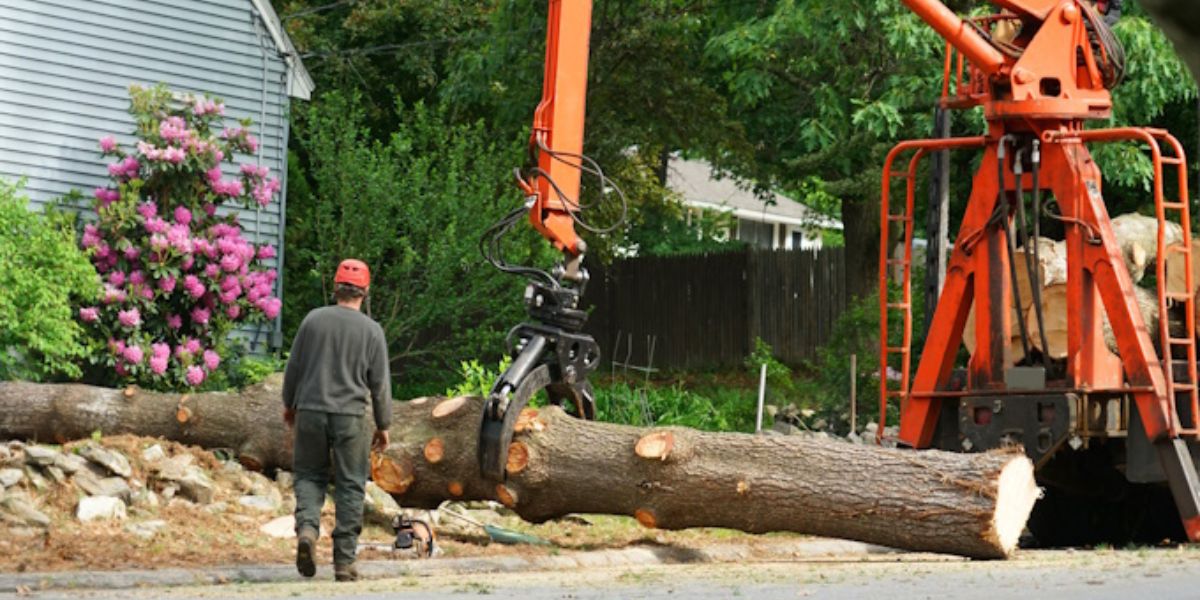
Some trees are too large or awkwardly positioned for climbers. Crane-assisted removal has become a go-to solution for massive trees in confined areas or when climbing poses a risk.
A crane operator lifts large sections of the tree out of tight spots with precision. While this method costs more up front, it can actually save money by avoiding damage. The hazardous dismantling process becomes more complex the closer a tree is to a structure, which is why experienced crews plan every cut.
Storm Damage and Emergency Removal Require Different Approaches
After a storm, damaged or fallen trees require immediate attention, but the way the crew works changes significantly. Structural damage makes these trees unpredictable. A successful tree extraction may require combining several methods, such as sectional cuts and rigging systems, to stabilize and remove a compromised tree without making things worse.
Choosing the Right Removal Method
Most homeowners never think about tree removal until a tree starts leaning, drops a major limb, or suffers storm damage. The right approach can protect your home, landscaping, and wallet.
From safely removing hazardous trees near structures to routine felling in open yards, Mercer Tree Service has the experience and equipment to handle any job. Call today at (817) 247-5651 for a guide to various types of tree removal services.
